
It’s a little known fact, but here in the UK you can legally ride a motorcycle on the road at the age of 16. After doing your CBT (compulsory basic training) and donning the L plates, you can ride a bike of up to 50cc, with a top speed of 28mph. Modest it may be, but the moped (as these bikes have become known) has provided independence to millions of youths over the years and created generation upon generation of long-term motorcyclists. But what is the history of this much loved type of motorcycle? Insidebikes brings you the lowdown…
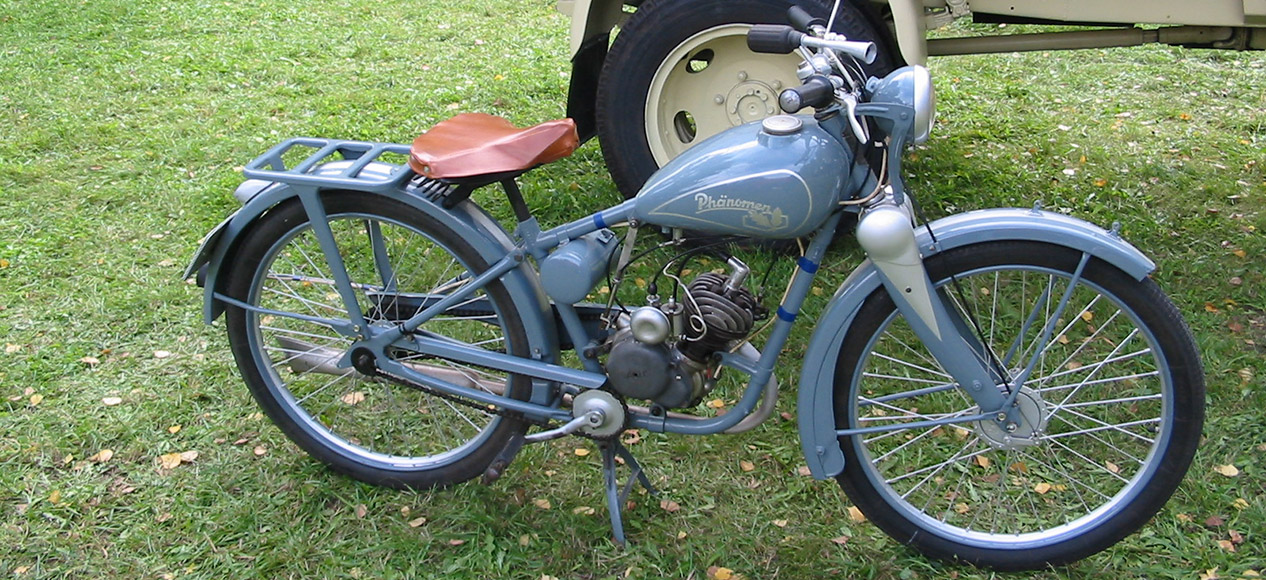
The term moped is a mix of the words ‘motorised’ and ‘bicycle’ which is no surprise when you consider that the first examples were little more than bicycles fitted with small engines. These early bikes retained the pedals of a bicycle, and these would be used to start the engine, pull away from the lights and even help the rider make it up steep hills. The term itself was coined in the 1950s, but it would be another two decades before moped mania hit the UK.
It was in 1971 when the laws for motorcycle licencing were changed. Up to that point 16 year olds could ride 250cc bikes on L plates, however the law changed to limit youngsters to 50cc machines fitted with pedals until their 17th birthday.
At the time of the law change, that would have meant that 16-year-olds would have been limited to humble step-thrus true to the motorised bicycle philosophy, however what the Government hadn’t banked upon was the motorcycle industry responding with a new generation of small motorbikes developed especially to get around the law.
The most famous of these was undoubtedly the Yamaha FS1-E. In the days before homogenised pan-European regulations, the FS1-E was developed especially for the UK market (although the E in FS1-E stood for ‘England’ much to the chagrin of Scottish, Welsh and Irish riders) although there were similar (but slightly different) versions made for other countries.
Launched in 1972, the FS1-E was styled like a standard sports motorcycle but had a 49cc two-stroke engine fitted with a four-speed gearbox and putting out almost 5bhp. To get around the law requiring pedals, an innovative system was created. These bicycle style pedals could be locked into place, making them essentially standard motorcycle foot pegs when on the go. The FS1-E had a top speed touching 50mph (although many riders modified their bikes and tuned them for even more) and a new generation of bike was born, known as the Sixteener Special.
These Sixteeners met the letter of the new laws, if not the spirit. The success of the Yamaha saw competition from Honda and Suzuki, although neither quite had the cultural impact or sales success of the ‘Fizzie’. Honda’s Cub based SS50 was another popular bike of the era but featured a four-stroke engine which was less tuneable than the two-stroke units employed in the FS1-E and Suzuki’s AP50.
These heady days did not last long though. The Government closed the loophole and in September 1977 (just after the S registration suffix came in) the law changed. Lightweight, sub 50cc motorcycles no longer needed to have pedals fitted and could still be ridden by 16-year-olds, however the new laws required these bikes to be restricted to 50kph, or 31mph. Despite no longer needing pedals, the moped name stuck and remains right through to today.
The new rules didn’t necessarily stop teenagers tuning their bikes up, but the law was now much clearer. With regulations more or less the same across the continent, a number of European brands cropped with cool new mopeds too, including the Austrian Puch Grand Prix and the staggeringly 1970s, Easy Rider style, Fantic Chopper. Kawasaki also came out with the sporty AR50, and a number of off-road, dirt bike styled mopeds also proved popular. The FS1-E continued to sell well, both new and second hand, and more than 200,000 examples were registered in the UK alone, before it was finally phased out in the early 1990s.
The heyday of the sport mopeds may be long gone but there’s still a lot of demand for 50s, not just from 16 year olds but also from commuters looking for an inexpensive and practical form of transport. Sports scooters like the Peugeot Speedfight, Gilera Runner and Yamaha AeroX R have become the popular choice for younger riders, while more conservative bikes like the Honda Vision and retro classics like the Vespa Primavera are much loved by city slickers looking for a stylish way to beat the urban traffic.
While most people still think of mopeds as only being step-thru, scooter type machines, the term still applies to all sub-50cc motorcycles. In recent years, the top speed was further limited to 28mph (45kph) but there remains a number of geared bikes on the market which can be ridden as a moped, including Aprilia’s exotic (and expensive) RS 50 sports bike and SX 50 supermoto and a whole host of Chinese built roadsters and retro machines from brands including Mash, Lexmoto, WK Bikes and AJS.
In recent years we have also seen the arrival of electric motorcycles and electric mopeds. These do not have conventional internal combustion engines, but machines limited to 28mph fall under the moped category and can be ridden on an AM motorcycle licence like the aforementioned petrol mopeds. These should not be confused with electric bicycles though, which do not require a licence to ride – provided they are limited to 15mph and a 250 watt motor – nor other legalities such as a crash helmet or insurance. These are proving increasingly popular with an increasing number of commuters and mark a return to those pioneering days of motorised bicycles.
This new generation of powered two wheelers prove that the market for small, lightweight and cheap to run bikes continues to evolve and adapt to changing demands. But whatever you choose to ride, these little machines continue to provide owners with independence, great memories and a practical way to get from A to B.
Do you ride a moped? You can get competitive moped insurance through Carole Nash. Call today for a free quote.
